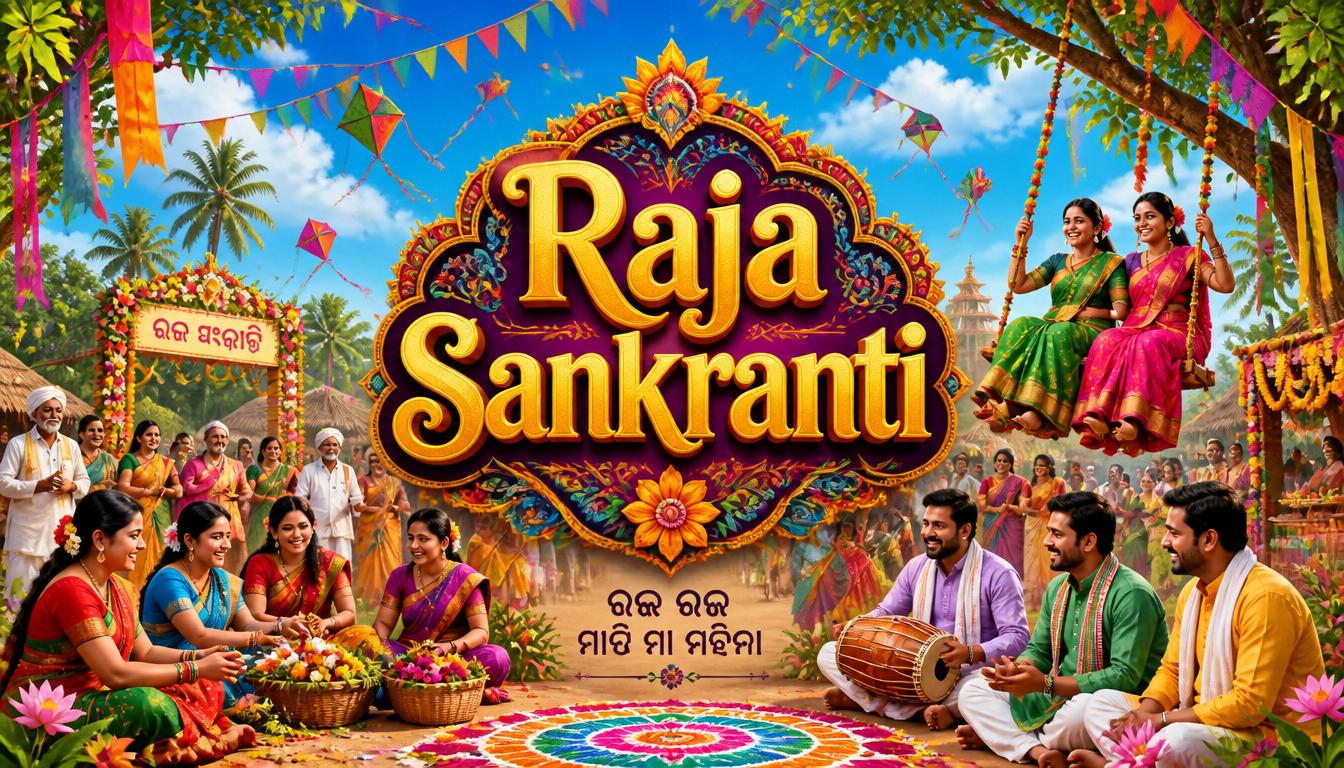
Raja Sankranti celebrates the rhythm of seasonal change in eastern India, marking a cultural pause that honors rest, fertility, and agricultural renewal across communities. Observed around <a href=”https://en.wikipedia.org/wiki/June_14″><b>June 14</b></a>, it stands among cherished <a href=”https://en.wikipedia.org/wiki/Festival”><b>Cultural Holidays</b></a> and <a href=”https://en.wikipedia.org/wiki/Holidays_in_India”><b>Indian Holidays</b></a> that emphasize reflection and tradition. It particularly honors <a href=”https://en.wikipedia.org/wiki/Women”><b>Women</b></a> Women, recognizing their symbolic connection to fertility and social continuity within rural traditions of <a href=”https://en.wikipedia.org/wiki/India”><b>India</b></a> India. Festivities unfold with ritual bathing, folk expression, and community gatherings that preserve heritage and reinforce cultural continuity. The observance radiates a contemplative atmosphere, blending agrarian symbolism with communal joy and subtle seasonal transition awareness. It strengthens cultural memory across generations.